Purpose of Digital Manipulation (Underlying Intentions)

Still and moving images make up a very important part of our cultural landscape both socially and formally. When questioning the purpose of digital manipulation and its’ intentions, we must consider why we are doing this, with what purpose, constrictions, and ethical morale in mind. To address these concerns, it is important to see why the picture was taken, and what we plan to do with it.

If the photograph is taken to post on social media platforms like Instagram or Tumblr for personal or artistic purposes only, then anything goes because only aesthetic reasons come into consideration. As any social media content provider, it is their job to present their interpretation of reality, likewise it is the job of the viewer to accept it or reject it. Whereas, if the photo was taken for more critical reasons like for a documentary or news article, then a set of ethical considerations come into play. As a journalist it is their responsibility to faithfully and truthfully interpret and represent reality in an image as well as I can understand it. These ethical considerations are preconceived by the photographer and the viewers of the image. Check out this link, to read more on the moral side of editing.

Most believe that digitally manipulated images are made with good intentions; to enhance the features of the images with digital tools to represent or signify things and their impertinence. However, it is important for viewers to consider and be aware that sometimes they can also be used with the intent to deceive them. An example of this would be using Photoshop to alter an image by adding a celebrity holding a product. This deceives the viewers into believing that the celebrity uses that product, and gets their buy in. However, it is assumed that the motivation behind each person is not to deceive their viewers, but to make images more visually appealing as a form of art.
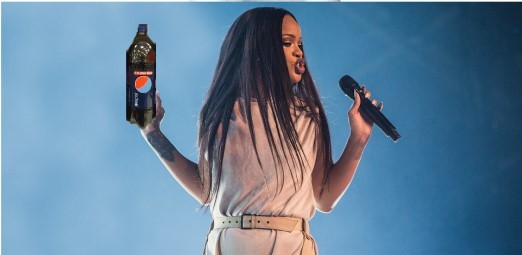
This image of Rihanna was edited of her holding a Pepsi bottle, to make her fans buy more Pepsi.

“Rihanna, Telenor Arena 2016” by NRK P3 is licensed under CC BY-NC-SA 2.0 

“Pepsi 1.5 Liter Size” by JeepersMedia is licensed under CC BY 2.0 

Why You Shouldn’t Believe Everything You See Online

Back when photography was first introduced, there was not a significant amount of technology surrounding it, and only few could afford it. People were easily able to believe it as a form of “reality” depicting the truth. It was considered the “realest” form of art, since it captured moments in real time. However, as immersing new technologies (Photoshop, iMovie, Windows Movie Maker, and Picasa) is more affordable and widespread, the “realness” of images became more controversial. With the ease in manipulating digital images with software in this day and age, people are questioning whether images are either “real” or “art”, and wondering if they can believe anything they see anymore. Some may think this is new, but people have been editing photos since the invention of photography.

An example of this is HDR photography. This technique involves taking three photos of the same subject, all in different exposures, and combining them with digital tool to make a single sharp image. Since image manipulation is easier and more sophisticated like in HDR photography, it also makes it increasingly difficult for viewers to pick out the difference between images representing absolute truth vs. subjective reality. Check out my other blog post (link) to read more about this topic.

Digital manipulation is used to make images more better visually. The importance of visualization is being able to engage and capture the audience’s attention better, and that is a priority for digital editors. Nowadays, people can easily edit their personal photos through apps like Snapchat and Instagram to represent the best versions of themselves. Since it is quite easy for people to digitally manipulate images or videos to represent subjective reality, it is important for people to be critical thinkers and not take things for how they seem. People should question whether what they see online to be “real” or “fake”.

This image was edited with a darker contrast to look more explosive and “real”.

“fake explosion crap” by stewsnooze is licensed under CC BY-NC-SA 2.0 

Objective Reality vs. Subjective Reality

While some may believe that unedited images and video taken represent objective reality, this is not the case. When someone takes a video or photo it is not a perfectly objective recording of reality, it is in fact subjective reality. The reason being is that, whoever is capturing the moment is capturing their interpretation of reality. It truly depends on the person and their interpretation of reality. They could have similar styles and techniques they use or can have completely different ones from one another. This all depends on the choice of technology and tools used by the photographer. Their choice of lens, filters, lighting, and more, have a part in how the photo or video turns out. Even the simplest features used by a photographer does not inherently represent objective reality, as no film or digital tool can perfectly and accurately capture reality.

Objective reality can be best noted as what we see right there in that moment that things happen. Color is created in the mind of whomever the observer is, and not a physical property of objects in the world. Therefore, even objective reality can be different for each observer depending on how they see things with the naked eye.

Moreover, majority of the time, the real existing world is not recorded with strict objectivity in photographs, and more so done subjectively. People with editorial judgments believe that digitally editing and enhancing images will make it more interesting version of their subjective reality. In doing so, they incorporate their own personal preferences, prejudices, purpose/intentions, aesthetics, and philosophies.

This image was edited by focusing on the bee and adding more contrast to it to look more threatening, than how it looks in real life.

“Bee” by Derek Bridges is licensed under CC BY 2.0 

The Societal Implications of Digital Manipulation

While digital manipulation is a form of art to enhance images to look better, there is a lot of underlying societal implications associated with it. The main negative aspect of digital manipulation is that it leads to harmful effects on public health. By fashion and beauty industries using technologies to retouch images and videos in editing advertisements, it promotes unrealistic beauty standards. With digital enhancement tools, advertisers try to create “perfection” and “flawless” in models by modifying skin tone, minimizing signs of wrinkles or blemishes, and/or modifying their body size/shape with no limitations (McBride et al., 2019). This heavily impacts individuals, especially younger generations, who are more prone to believe what they see easily without critiquing it. Check out this link to read more about why you shouldn’t believe everything you see. It is crucial that people are able to distinguish what is “real”, as the negative impacts can easy affect someone’s health; psychologically, physically, and socially.

More precisely, being exposed to unrealistic beauty standards is linked to greater body dissatisfaction, worse mood, poorer self-esteem, and increased risk for disordered eating behaviors (McBride et al., 2019). This is concerning especially with high rates of media consumption by youth individuals, as they are more prone to poorer health ranging from eating disorders to depression and anxiety. To address this social issue, global policy initiatives have taken an approach to design and regulate digital retouching to reduce health harms to consumers (McBride et al., 2019), which is commendable. However, a lot more can be done to address this social issue regarding digital manipulation’s negative impacts. Make sure to check out this link to read more on Digital Manipulation of Images of Models’ Appearance in Advertising.  

This image was edited to make the model’s skin more smooth and her complexion was also lightened.

“Amandine – Black on White” by Jon_Senior is licensed under CC BY-NC-ND 2.0 

Reference: McBride, C., Costello, N., Ambwani, S., Wilhite, B., & Austin, S. B. (2019). Digital Manipulation of Images of Models’ Appearance in Advertising: Strategies for Action Through Law and Corporate Social Responsibility Incentives to Protect Public Health. American Journal of Law & Medicine, 45(1), 7–31. https://doi.org/10.1177/0098858819849990

The Moral Dilemma of Digital Manipulation

Although digital manipulation is widely used as an art form, the questions is as to where the line is between “art” and being ethical? As an editor it is important that they act morally in representing images and portraying reality. However, this doesn’t mean that they have limitations on how much, or to what extent in which they can edit. More so, they have to make sure that when they represent these digital pieces, that they are transparent with their audience, if it comes to any questions or concerns about their work. To my belief, as long as the person is clear on their methods and intentions without misleading or misrepresenting something, it is morally justified. Only if the artist were to purposefully lie to someone about their intentions and motivations in presenting images, I would find it morally wrong.

To put this in perspective, picture yourself editing a selfie you took of yourself, and changing the colour of the sky from blue to purple to post on your Instagram. Morally, you have no obligation or restrictions to represent objective reality and have the freedom to edit your photo to however you like. However, if you were a photographer working for a newspaper taking photos of a war zone, it is your job to represent reality as close as it can be. In this case it would be morally wrong if they were to, for example, edit the photos and add more dead bodies to get more views.

Additional people were added to this war photo to make it look more disastrous.

“Picking up the pieces” by timmredpath is licensed under CC BY-NC-ND 2.0 

Another moral dilemma has to do with the right of privacy vs. the right of publicity. If a celebrity gave permission for a magazine to take photos of them, but they edited the images to be almost nude without telling the celebrity, is that morally correct? Sure, they did give permission as the right of publicity, but the magazine morally did not follow the celebrity’s right of privacy to discuss the edits being done. This happened to Coco Rocha, a supermodel, as well as several others, who have expressed frustration about excessive image manipulation (Williams-Vickery, 2018).

Check out this link to read more about “Addressing Egregious Digital Manipulation of Celebrity Images”.

References: Williams-Vickery, J. L. (2018). A gap in the law: Addressing egregious digital manipulation of celebrity images. Georgia State University Law Review, 34(3), 795.

Personal Brand Statement

“I spark new innovative ideas that provide solutions to everyday problems.”

Developing a brand statement can be quite difficult. It is not an easy task to encapsulate your essential qualities and unique value proposition in just a line or two. Personally, for me, being concise is pretty hard, since I am used to expanding my thoughts and being more detailed. I started off by brainstorming some qualities I have as a person; both what others think of me and what I think of myself. Then I narrowed it down to the two most strongest abilities that I have as a person. Finally, I chose the one that I felt would stand out the most, amongst others’ personal brand statements and was more unique.

When putting it together, I had to consider and imagine that one person would be reading hundreds of personal brand statements, and had to choose only a few individuals. In order to compete with others, I had to make sure my personal brand statement was something very few to none would think about. Therefore, I came with the idea to choose the most unique quality about me. Since early high school I have wanted to become an entrepreneur, and from then I have kept a journal of everyday problems I personally encounter or see someone else encounter during my daily life. I like to think of possible innovative ideas or solutions that can help fix these everyday problems and write them down in my journal. My hopes are that one day I can bring one or more of these ideas to life as an entrepreneur. Moreover, I feel as tough this personal quality describes and define me the most, and hence it is perfect to use it for my personal brand statement.